Explainer Video
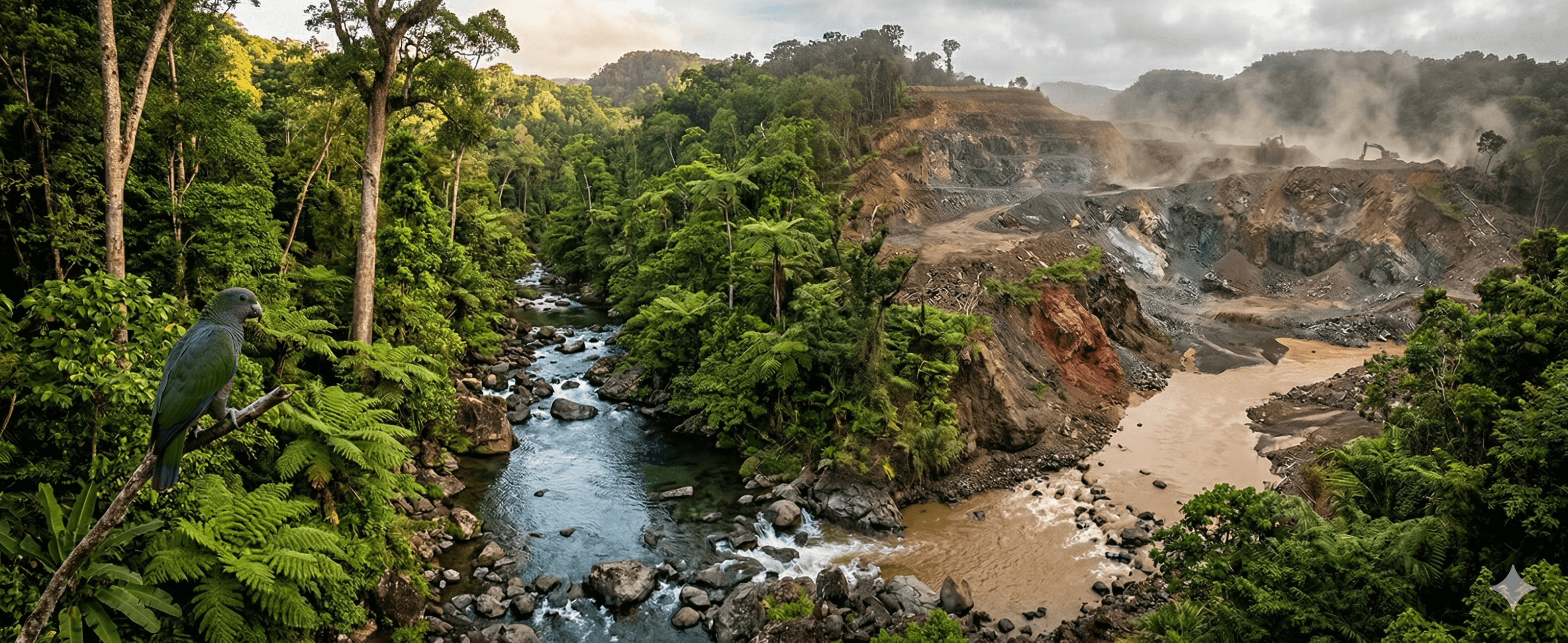
The Commonwealth of Dominica stands at a defining junction where its long-term economic aspirations and its foundational environmental identity converge in high-stakes tension. As the nation undertakes construction of its $370 million international airport at Wesley, the logistical requirement for massive volumes of construction aggregate has led to the activation of the Deux Branches quarry site.
This project is not merely an infrastructure upgrade; it is the cornerstone of a macroeconomic strategy intended to achieve "leapfrog GDP growth." However, the environmental controversy surrounding Deux Branches—located in a critical watershed adjacent to the Northern Forest Reserve and near the Kalinago Territory—presents a complex challenge to the state's "Nature Island" branding.
The Central Environmental Question
Can Dominica's urgent need for produced capital (airport infrastructure) be reconciled with the preservation of its natural capital (watersheds, forests, endemic species)? Or does the Deux Branches quarry represent an ecological transgression that risks permanent damage to the nation's most sensitive hydrological and biological systems?
Infrastructure Demands and Environmental Pressure
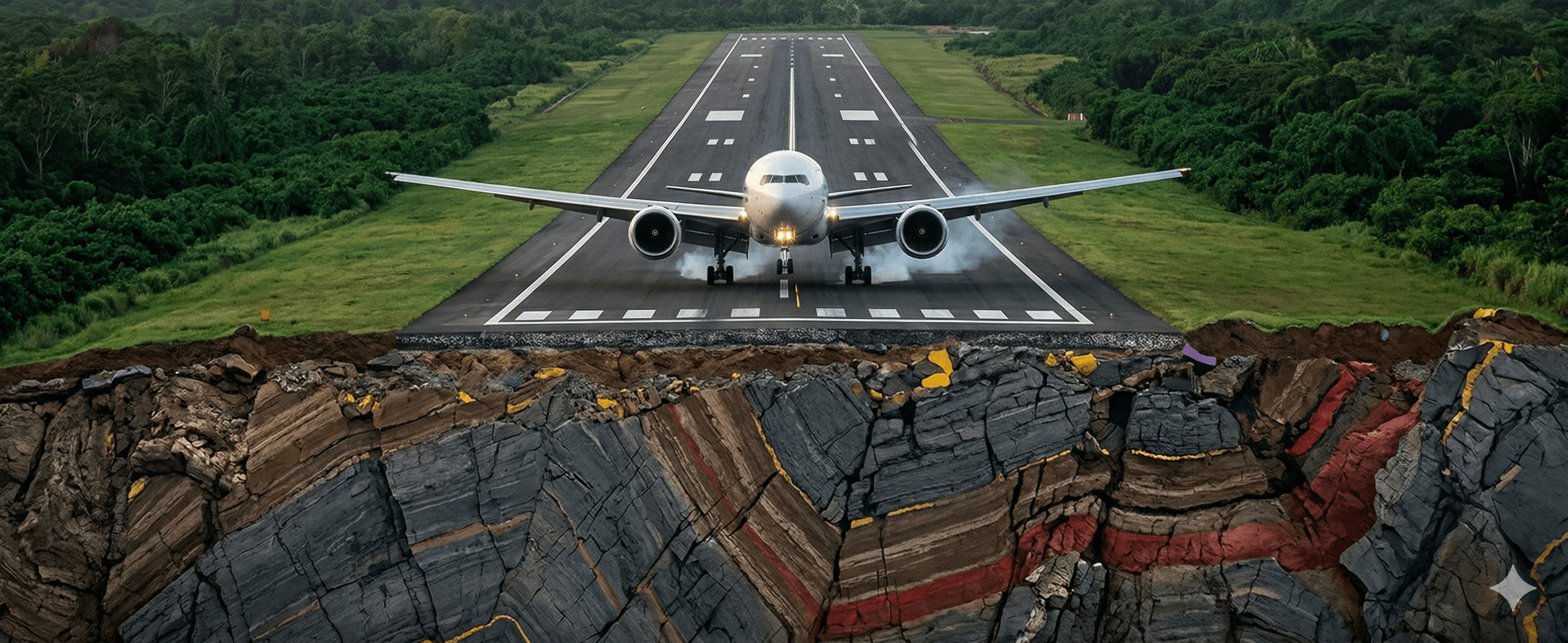
The construction of the Dominica International Airport is an undertaking of unprecedented scale for the Eastern Caribbean. The project requires the transformation of approximately 22,000 square meters of terrain into a modern aviation hub capable of accommodating wide-body aircraft and large international jets.
Airport Project Scale
Technical specifications and construction progress
| Component | Specification / Progress |
|---|---|
| Runway Length | 2,850 Meters (9,350 Feet) |
| Runway Width | 45 Meters |
| Backfilling Progress | 88.6% Complete (as of Dec 2025) |
| Total Excavation | 83.4% Complete (as of Dec 2025) |
| Estimated Cost | > EC$1 Billion+ |
| Target Completion | 2027 (Estimated) |
The demand for high-quality aggregate is the primary driver behind operations at Deux Branches. Airport construction imposes significantly more stringent technical requirements on material density, hardness, and strength than standard road construction. However, the reactivation of this site in 2025 has encountered fierce resistance from environmental advocates who point to cumulative ecological pressures that have intensified since the site was last quarried decades ago.
Hydrological Disruption and Water Pollution
The quarry is situated within the vital watershed of the Pagua River, one of the ten largest rivers in Dominica with average annual flows reaching 10 million gallons per day. This river system is the primary lifeblood for the indigenous Kalinago people, who rely on it for drinking water, domestic use, and fishing.
Map of the Pagua River watershed showing the quarry's position and downstream water dependencies
Sedimentation Crisis
Activists have provided visible evidence of heavy sedimentation, reporting that runoff from the quarry has clouded the river and the famous Ma-Jo Basin, a natural pool of immense cultural and recreational significance. The Dominica Hotel and Tourism Association (DHTA) has echoed these concerns, noting that water quality is the foundation of community livelihoods and the nation's identity.
The technical risk involves disruption of the hydrological cycle. Deep excavations for aggregate can intersect the local water table, potentially leading to the permanent loss of natural springs and degradation of groundwater storage capacity. In a tropical environment with steep terrain and high rainfall, these disruptions can destabilize the river's channel form, increasing erosion and sedimentation risks for downstream communities.
Visual comparison showing the impact of sedimentation on the Ma-Jo Basin's water clarity
Biodiversity Threats and the Northern Forest Reserve
Dominica's forest cover, estimated between 60% and 75%, is the most extensive in the Lesser Antilles. The Deux Branches site sits at a critical ecological boundary, with allegations that the quarry's operations overlap with the legally protected Northern Forest Reserve. This reserve is not merely a collection of trees; it is a complex habitat for endangered endemic species.
Endangered Endemic Species
Species at risk from quarry operations
| Species | Status | Habitat Requirements |
|---|---|---|
| Sisserou Parrot (National Bird) | Endemic & Endangered | Mature Rainforest / Northern Reserve |
| Red-necked (Jaco) Parrot | Endemic & Endangered | Dense Tropical Rainforest |
| Gommier Trees | Primary Canopy Species | Interior Forest Reserves |
| Endemic Vascular Plants | 1,226 Species Identified | Diverse Volcanic Slopes |
Diagram showing how quarry operations create "edge effects" that alter the micro-climate required for endemic avian breeding
Edge Effects and Habitat Loss
The encroachment into or proximity to the Northern Forest Reserve creates "edge effects," where the removal of mature forest cover exposes the interior of the reserve to increased sunlight, wind, and invasive species pressure, fundamentally altering the micro-climate required for endemic avian breeding. Critics argue that the loss of these habitats directly undermines Dominica's reputation and threatens the biodiversity that anchors its high-value eco-tourism sector.
Chemical Mobilization and Toxic Leaching
Perhaps the most severe long-term risk identified by independent assessments is the potential for toxic metal mobilization. Independent geological findings have confirmed the presence of copper and sulphide mineral anomalies at the Deux Branches site.
Scientific diagram showing how sulphide mineral exposure creates sulfuric acid that leaches toxic metals into waterways
Acid Rock Drainage (ARD)
The concern centers on acid rock drainage (ARD), a process where sulphide minerals are exposed to air and water during excavation, creating sulfuric acid. This acid then leaches toxic metals—such as arsenic, mercury, and cadmium—into the surrounding soil and waterways.
Community-led water testing in similar environments has shown that such processes can lead to high acidity and heavy metal concentrations that make natural water sources unusable for human consumption. Activists fear that the quarry may trigger a chemical contamination event that persists long after the airport construction is finished.
Potential Toxic Metals in ARD
• Arsenic
Carcinogenic, affects nervous system
• Mercury
Neurotoxin, bioaccumulates in fish
• Cadmium
Kidney damage, bone deterioration
• Copper (excess)
Liver toxicity, gastrointestinal issues
Government Mitigation Measures
The state's defense of the Deux Branches operations emphasizes "responsible, managed development." Developers claim to have implemented a "closed-loop" mitigation strategy to address sedimentation and safety.
Technical diagram showing the engineered mitigation systems implemented at Deux Branches
✓Tiered Sedimentation Ponds
A network of concrete ponds designed to slow water velocity and trap "stone flour" (fine rock particles) before runoff enters the river.
✓Reinforced Retaining Walls
Geotechnical structures introduced to manage surface water and ensure slope stability for both personnel and equipment.
✓Wheel-Wash Bays
Systems to prevent trucks from carrying mud and debris onto public roads, reducing secondary environmental and safety impacts.
✓Dust Suppression
The use of automated misting cannons and water trucks to manage silica dust emissions during crushing operations.
✓50-Meter Buffer Zone
Established by the Forestry Wildlife and Parks Division to protect the Northern Forest Reserve. Continuous monitoring of soil and water quality.
Effectiveness Disputed
While the government emphasizes these mitigation measures, activists continue to report ongoing pollution and witness heavy sedimentation of the Pagua River. The gap between stated mitigation and observed outcomes remains a central point of contention in the environmental debate.
The Carbon Footprint and Logistics Argument
A primary pillar of the government's position is the mitigation of the carbon footprint associated with construction materials. Importing millions of tons of aggregate from overseas is dismissed as "economically absurd" and "environmentally contradictory." Sourcing from alternative domestic sites on the West Coast is presented as a logistical nightmare.
Comparative analysis of carbon emissions for different aggregate sourcing scenarios
Overseas Import
- • Massive shipping emissions
- • Port infrastructure strain
- • Currency outflow
- • Environmental cost exported
West Coast Quarries
- • Hundreds of daily truck trips
- • Mountain road degradation
- • Traffic congestion
- • High carbon from idling
Deux Branches
- • Proximity to site
- • Minimal transport
- • Internalized footprint
- • Managed through engineering
By utilizing a local source, the government claims it is internalizing the environmental footprint and managing it through modern engineering rather than exporting the burden to another nation or degrading the national road network.
Balancing Development and Environmental Stewardship
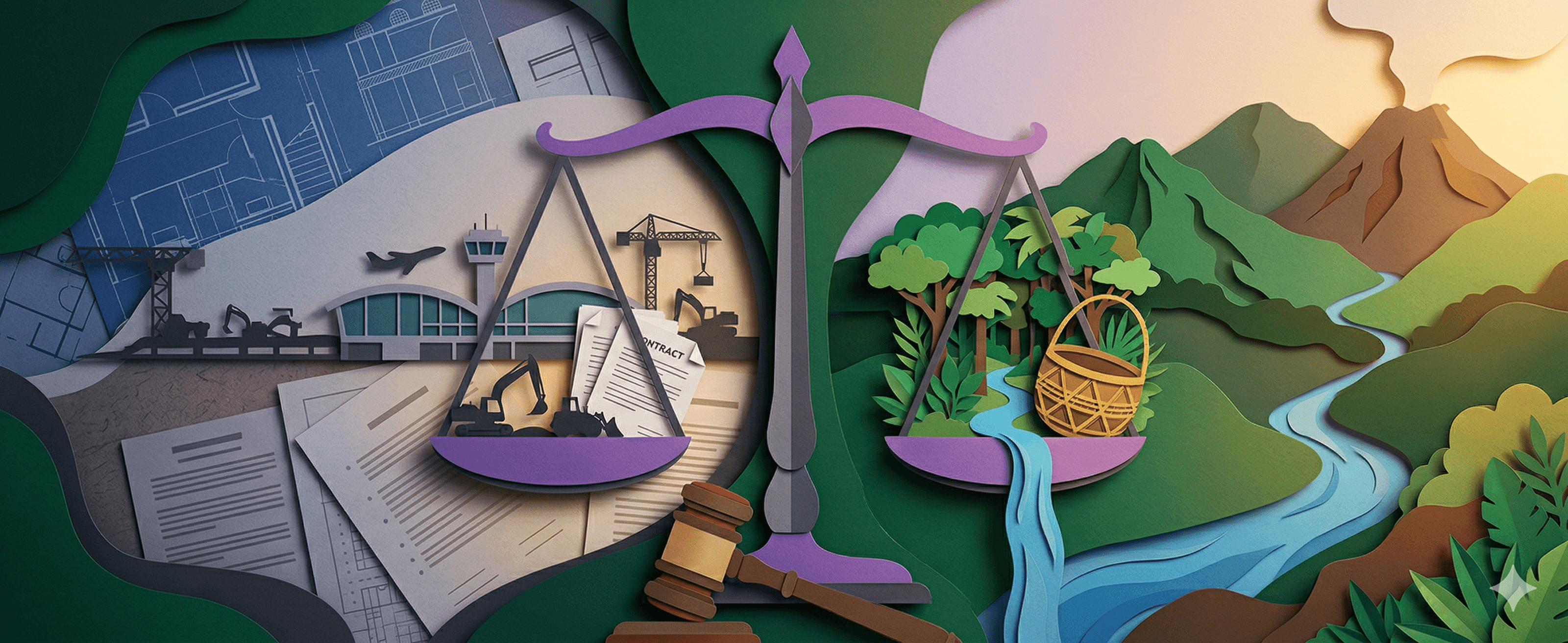
The discourse surrounding Deux Branches is characterized by a fundamental disagreement over the valuation of natural capital versus the urgency of produced capital development. Navigating this impasse requires objective examination of environmental impacts, transparent assessment of mitigation efficacy, and rigorous application of sustainability frameworks.
Only through comprehensive environmental monitoring, independent verification, and adaptive management can Dominica ensure that development does not inadvertently liquidate the very natural assets upon which its future prosperity depends. The "Nature Island" must find a path that honors both its ecological heritage and its development aspirations.
Environmental Impact Quiz
Score 70% or higher to earn a badge
Sign in to take quizzes and earn badges
Sign InMore Explainers
Next in the series
Social & Ethical Dimensions
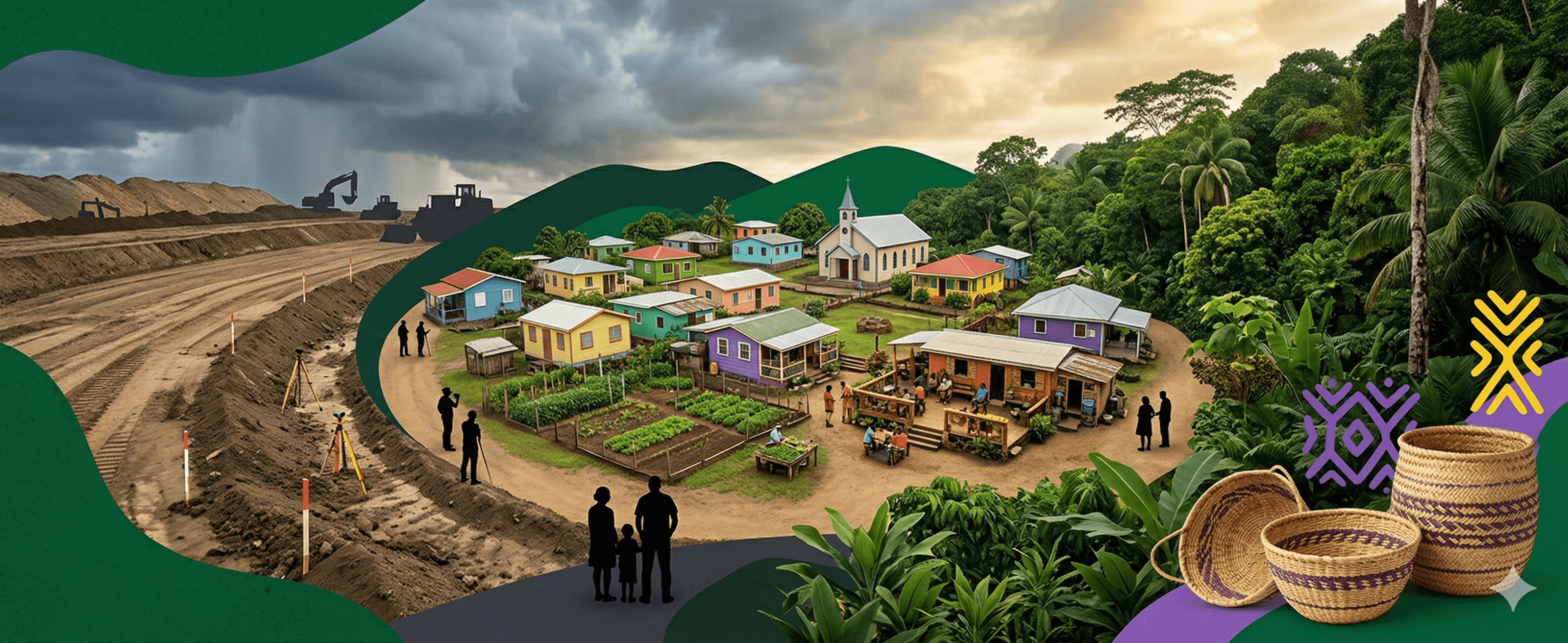
See how these environmental impacts affect real communities and indigenous rights.
Continue to Social & Ethical